
Woodworking is a wonderfully rewarding hobby, but it involves sharp tools, powerful machinery, and materials that can cause serious injury if not handled correctly. The good news is that almost all woodworking accidents are preventable. Follow these safety principles from day one, and they’ll become second nature — protecting you for a lifetime of enjoyable woodworking.
Personal Protective Equipment: Never Skip It
Safety glasses are non-negotiable every time you cut, sand, chisel, or drill. Wood chips and debris travel at high speed and can cause permanent eye damage. Hearing protection is essential for any power tool use — even short-term exposure to tools above 85 dB causes cumulative hearing loss. A dust mask rated N95 or better protects your lungs from fine sawdust, which is a recognized carcinogen with long-term exposure.
Know Your Tools Before You Use Them
Never use a tool you haven’t been properly shown how to operate. Read the manual. Watch video tutorials from reputable sources before using a new tool for the first time. Understand kickback — one of the most dangerous phenomena in power saw use — and what causes it. Know where the blade guard is and keep it in place unless the specific cut requires its removal.
Keep Your Tools Sharp
Dull tools are far more dangerous than sharp ones — they require more force, are more likely to slip, and produce poor results. A sharp chisel cuts where you direct it; a dull chisel goes where it wants. Sharpen chisels, hand plane irons, and hand saws regularly. Replace saw blades on power tools before they become obviously dull. Sharpening is a core skill, not an optional one.
Secure Your Work Before Cutting
Never hold work with your hand while cutting — always clamp or secure it properly. A piece of wood that can shift mid-cut is unpredictable and dangerous. Use a bench vise, clamps, a hold-down, or a non-slip mat depending on the task. ‘I’ll just hold it carefully’ is how most workshop injuries happen. Always take the extra thirty seconds to clamp your work.
Fire and Dust Safety
Sawdust is highly flammable — keep your workshop clean and never let it accumulate near any heat source. Oil-soaked rags (particularly those used with linseed oil) can spontaneously combust — lay them flat to dry outdoors rather than bunching them up, or dispose of them in a metal container with a lid. Have a working fire extinguisher in your workshop and know how to use it.
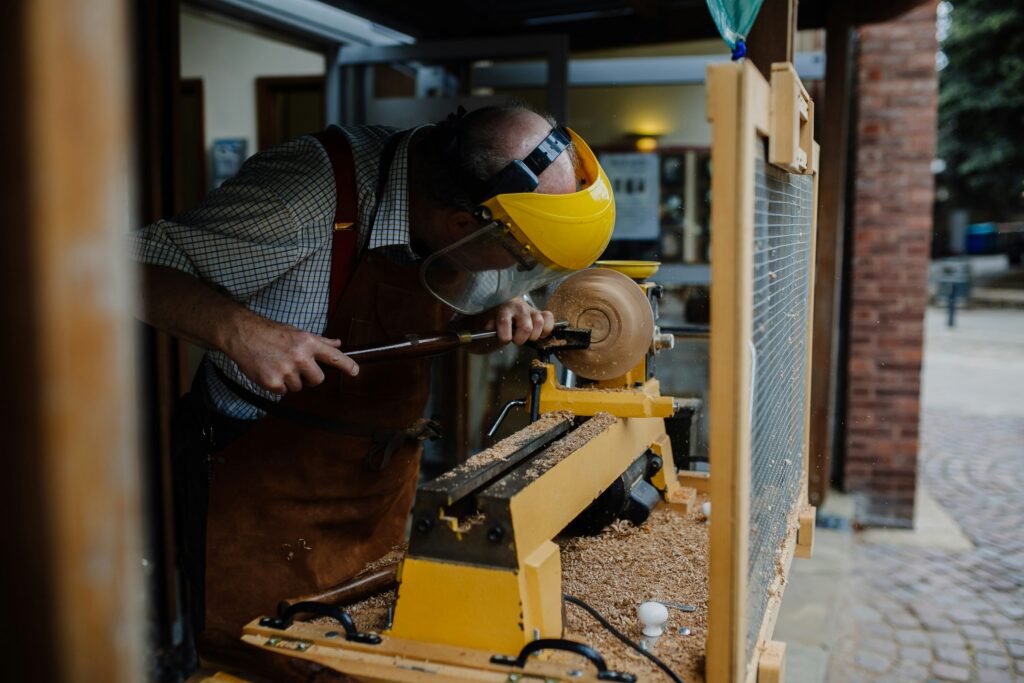
Safety in the workshop is about habits, not luck. Establish safe habits from your very first project — wear your PPE, secure your work, keep your tools sharp, and keep your shop clean — and woodworking will reward you with a lifetime of safe, enjoyable creative work.