Not everyone has the luxury of a large two-car garage workshop. Many excellent woodworkers operate out of a single spare room, a garden shed, or a corner of a garage. A small workspace doesn’t have to limit what you can create — it just requires smarter organization and a more considered approach to tools and layout. Here’s how to make the most of a small woodworking space.
Plan Your Space Before Buying Tools
Before you invest in any power tools or storage, sketch a floor plan of your space. Mark where power outlets are, where natural light comes from, and which direction the door opens. Plan your workbench position first — it’s the anchor of the shop and everything else flows around it. Identify your primary workflow (where wood enters, where it’s worked, where it’s finished) and lay out your space to support that movement.
Multi-Purpose Tools Save Space
In a small shop, every tool needs to earn its place. A track saw replaces a table saw for many operations and takes no floor space when stored. A workbench with a built-in vise replaces several separate clamping solutions. A drill/driver with multiple bits replaces a handful of separate tools. Choose tools that offer maximum versatility in the smallest possible footprint — and resist buying single-purpose tools until your space genuinely allows for them.
Vertical Storage: Your Secret Weapon
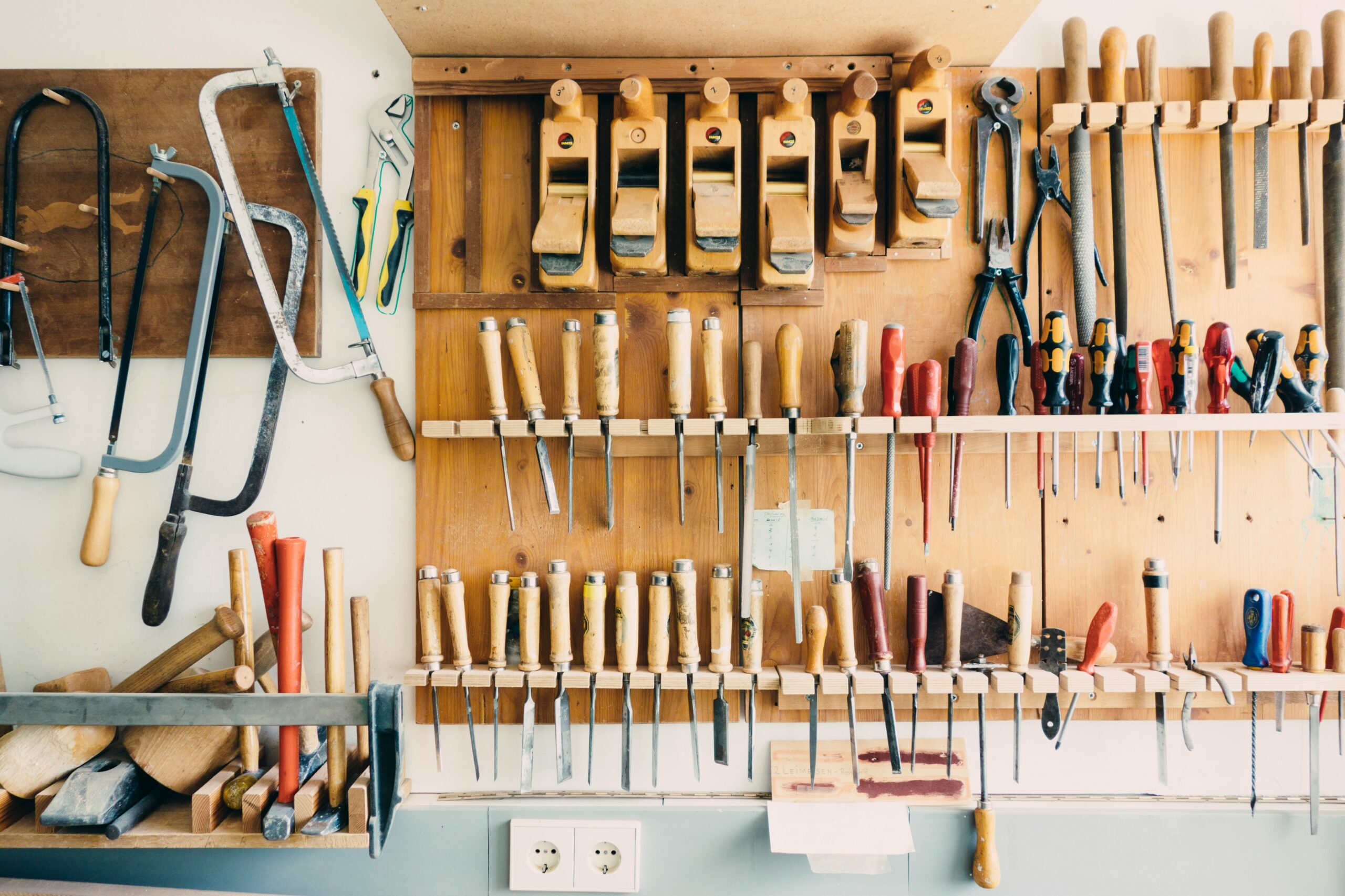
In a small shop, floor space is precious and wall space is often underused. A full wall of pegboard can store dozens of tools accessibly without taking any floor space. French cleats (angled wooden strips on the wall) allow you to hang and rearrange storage solutions infinitely without drilling new holes. Stack storage bins vertically. Hang clamps on wall-mounted horizontal dowels. Think up, not out — vertical storage is the small shop’s greatest asset.
Make Everything Mobile
If your tools are on wheels, your space can transform from one configuration to another in minutes. Mount heavy tools like bench-top band saws and drill presses on rolling stands that move to the center of the floor when in use and push to the wall when not. A fold-down workbench that mounts to the wall and folds flat takes zero floor space when not in use — a game-changer for small shops.
Dust and Noise in Small Spaces
In a small space, dust accumulates faster and noise bounces harder. A compact but effective dust collector connected directly to your tools is essential — sawdust in an enclosed space is both a health hazard and a fire risk. For noise, be mindful of your neighbors and avoid early mornings and evenings. Acoustic foam panels on the walls reduce noise transmission and can double as material display boards.
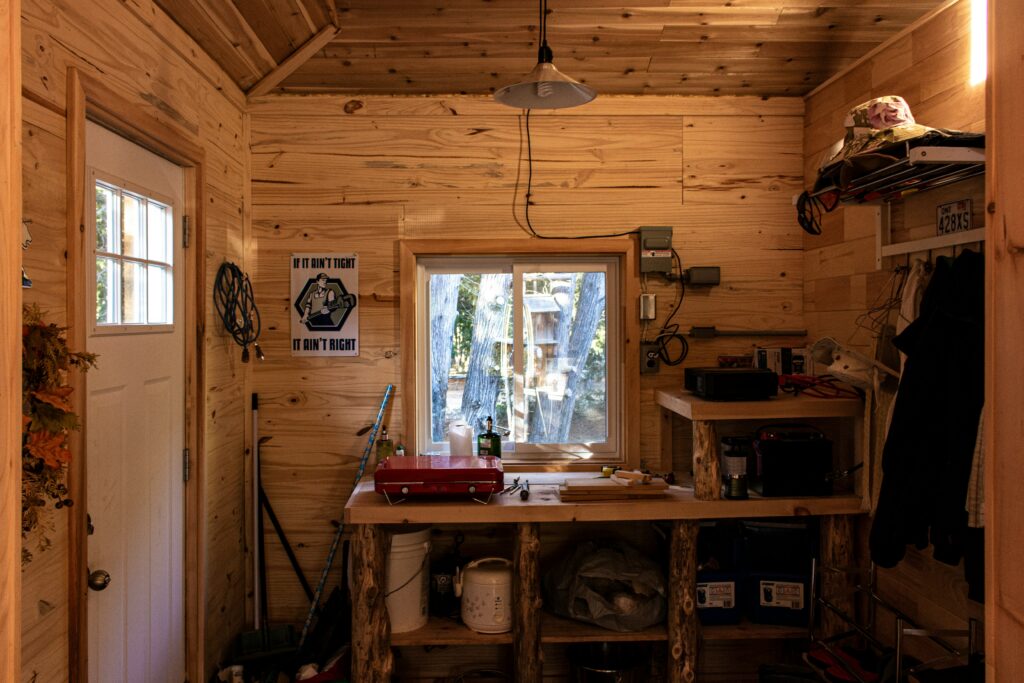
Some of the world’s finest furniture has been made in workshops smaller than a garden shed. A small space forces you to be organized, intentional, and creative — qualities that make you a better woodworker. Don’t let the size of your space limit the size of your ambitions.